
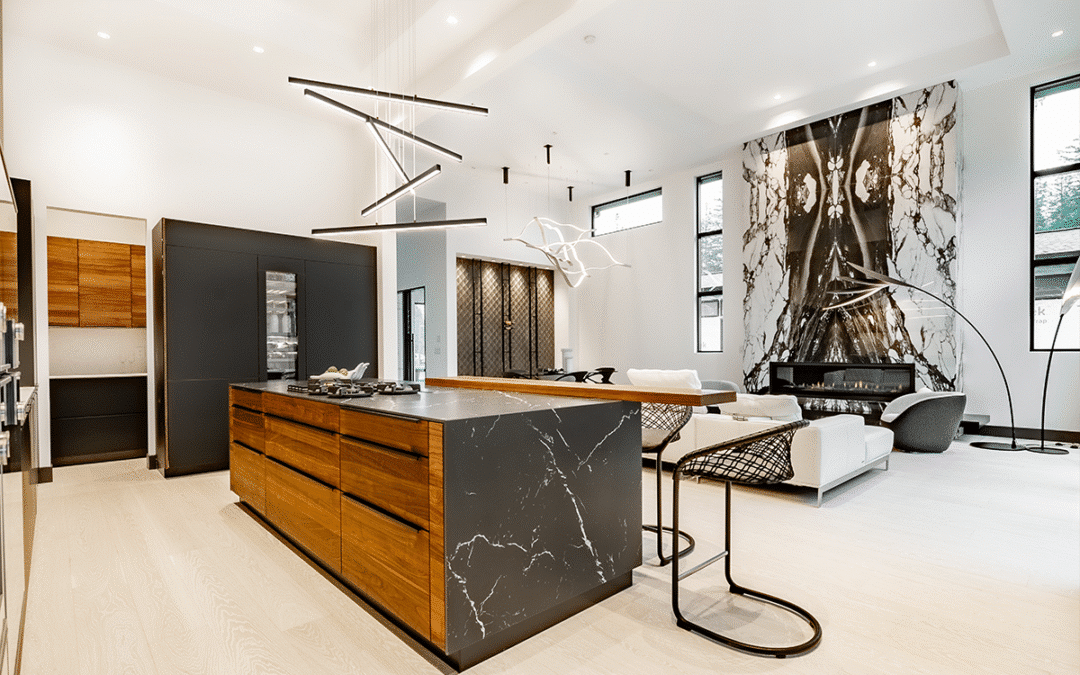
Kitchen renovation projects often start with high expectations and a long list of ideas saved from shows, Pinterest boards, or big-box catalogs. But once the planning begins, many homeowners run into the same friction points: budgets stretch faster than expected, layouts don’t work the way they looked on paper, and design choices start to feel driven by trends instead of how the space is actually used.
A common gap sits right there. Most people approach a kitchen renovation focusing on finishes first, cabinets, countertops, and colors, without fully understanding how layout, storage strategy, and material selection affect long-term performance. That’s where costs quietly rise and functionality gets compromised.
This is where experienced designers and builders tend to think differently. They prioritize flow before finishes, hidden storage over visible clutter, and durable materials over short-term visual appeal. These decisions are not always obvious, and they are rarely highlighted in renovation shows or showroom displays.
In this guide, you’ll get a clearer view of what actually drives value in a kitchen renovation, and under the keen eye of Michael Froehler, partner at J.M. Froehler Construction!
We’ll break down what’s included in a full remodel, share practical design ideas that improve both space and usability, and walk through realistic cost expectations. You’ll also see where budgets typically go off track, how long projects take, and which mistakes tend to create the most frustration during construction.
If you’re planning a kitchen renovation, or even just starting to think about one, this will help you approach the project with a more informed perspective and a better sense of where to invest for lasting results.
What adds the most value in a kitchen renovation?
Value in a kitchen renovation rarely comes from one standout feature. It comes from how well the space works day-to-day and how long those choices hold up.
Layout is often the biggest driver:
“A kitchen that improves movement between prep, cooking, and storage areas tends to feel better immediately. Even small adjustments, like widening a walkway or repositioning an island, can change how the entire space functions.” – Michael Froehler.
Cabinetry follows closely behind. Not just the style, but the internal organization. Deep drawers, pull-out trays, and vertical dividers make storage more usable. Many homeowners focus on door fronts, while builders look at what happens inside the cabinet.
Countertops and surfaces also play a role, especially when durability matches the way you use the kitchen. Materials that resist staining, heat, and wear tend to deliver more long-term value than options chosen purely for appearance.
Lighting is another area that often gets overlooked. Layered lighting, combining ambient, task, and accent, improves both usability and the overall feel of the space. Under-cabinet lighting alone can make prep work easier and highlight finishes without major cost increases.
Appliances matter, but not always in the way people expect. Consistency and proper sizing tend to add more value than going for the highest-end model. A well-integrated appliance layout supports workflow instead of interrupting it.
When these elements work together, the kitchen feels intentional. That’s where value becomes noticeable, not just in resale, but in everyday use.
What does a kitchen renovation include?
Kitchen renovations vary from surface updates to structural overhauls. Knowing the typical phases helps manage expectations.
- Demolition: Removal of old components and adjustments to framing to accommodate layout changes.
- Rough-in phase: Updating or moving utilities and finalizing appliance and lighting placement.
- Installation: Sequential setup of cabinets, countertops, backsplash, and flooring.
- Finishing: Painting, trim, hardware, and installation of final fixtures, appliances, and custom features.
- Permits and Inspections: Necessary for major system modifications to stay on timeline.
Most renovations follow this path. Understanding each stage ensures timely decisions and prevents construction delays.
Regional Tip: In Virginia Beach, permit requirements can vary depending on the scope of electrical, plumbing, or structural changes. Reviewing local guidelines early helps avoid delays once construction begins!
Kitchen renovation ideas
According to Michael Froehler, some of the most effective kitchen renovation ideas are not the ones that stand out immediately. They are the ones who quietly improve how the space works.
These ideas may not always be the most obvious, but they tend to deliver better results over time, both in function and in how the kitchen feels to use every day. Check them out!
Balanced Island Layout with Integrated Storage
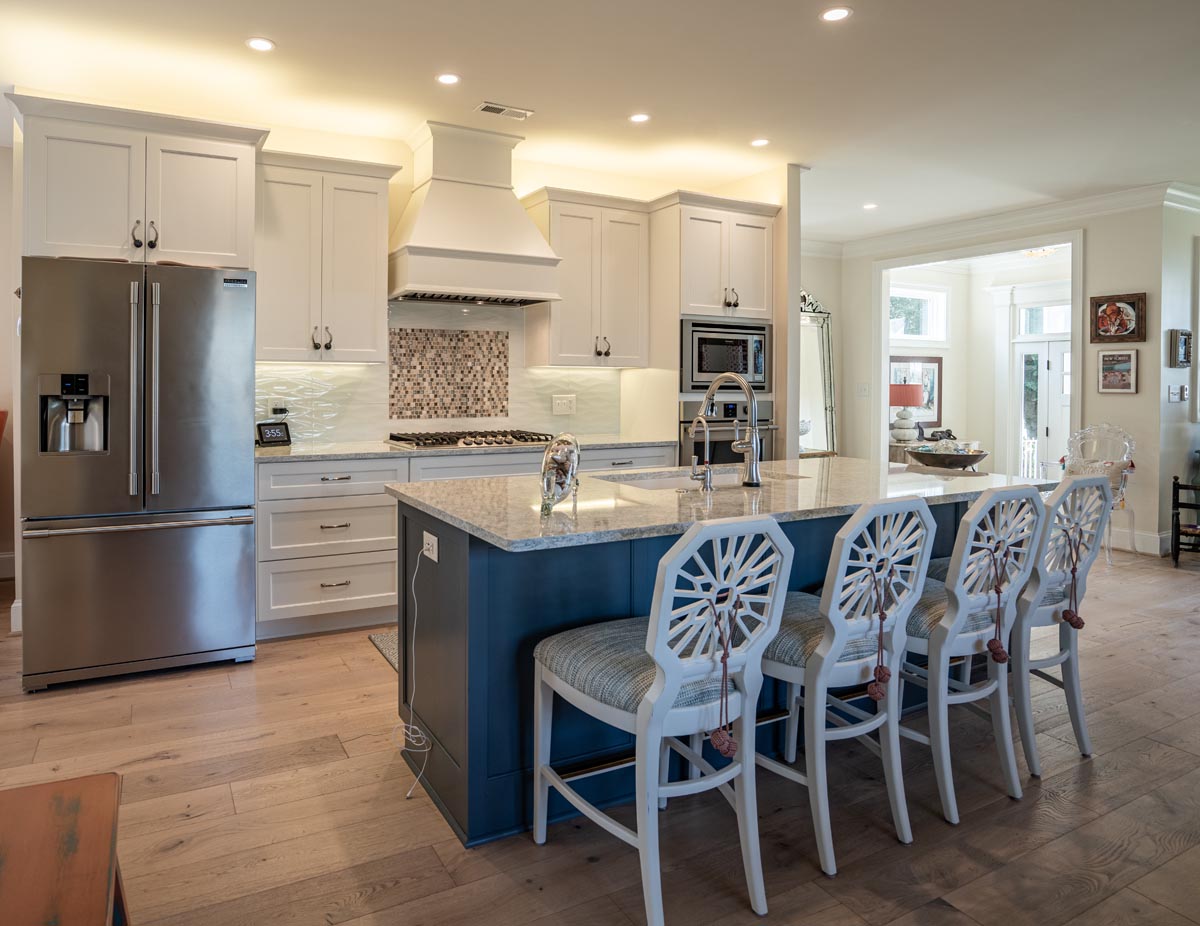
This kitchen shows how a well-sized island can define the entire space. It creates a natural center for prep, seating, and storage while maintaining clear walkways between the main work areas. The result is a layout that feels open but still highly functional for everyday use.
Cabinetry extending to the ceiling improves storage and gives the space a more finished look. The contrast between the darker island and lighter perimeter cabinets adds depth without overwhelming the design, while built-in appliances keep sightlines clean and uncluttered.
Large-Format Island with Clean Sightlines
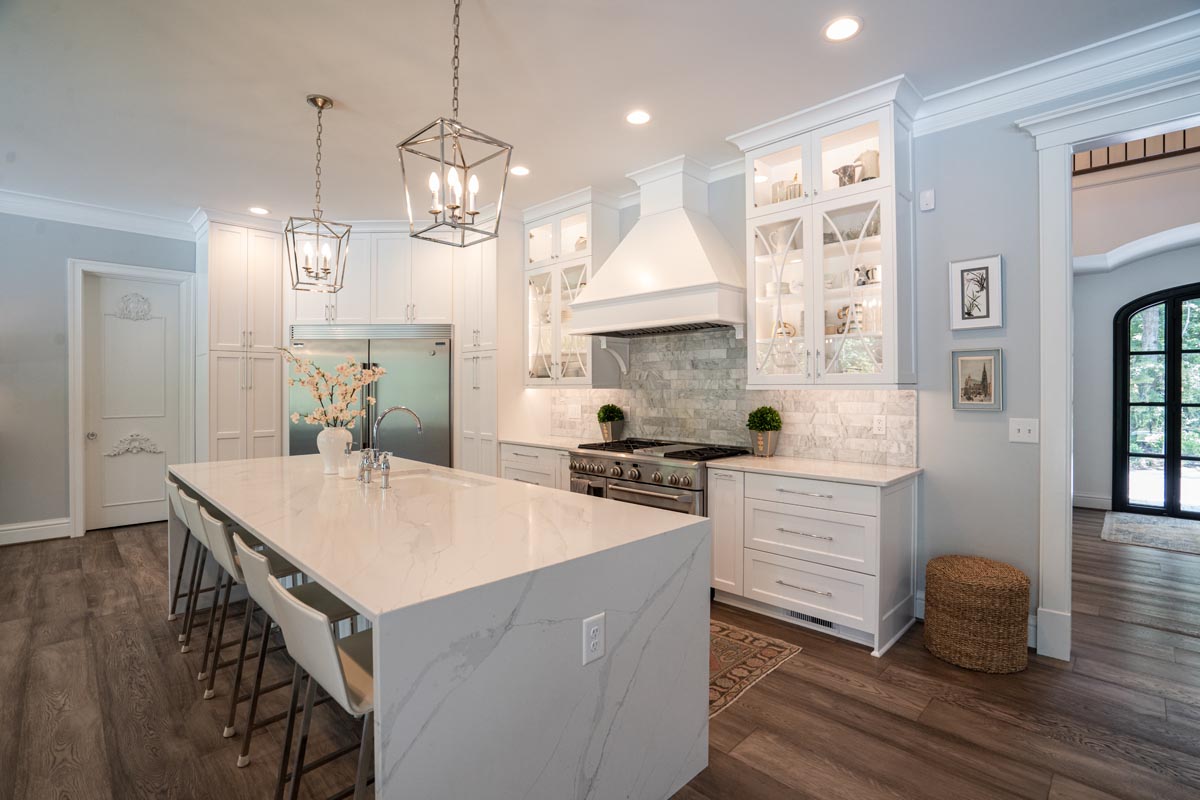
This layout uses a large island to handle multiple functions without breaking the visual flow. It works as a prep surface, seating area, and gathering point, while still maintaining clear access to the cooking and refrigeration zones.
Glass-front upper cabinets add depth and lighten the wall visually, preventing the cabinetry from feeling too heavy. Paired with consistent finishes and built-in appliances, the space stays cohesive while allowing a few details to stand out without cluttering the design.
Chef’s Command Center with Architectural Depth
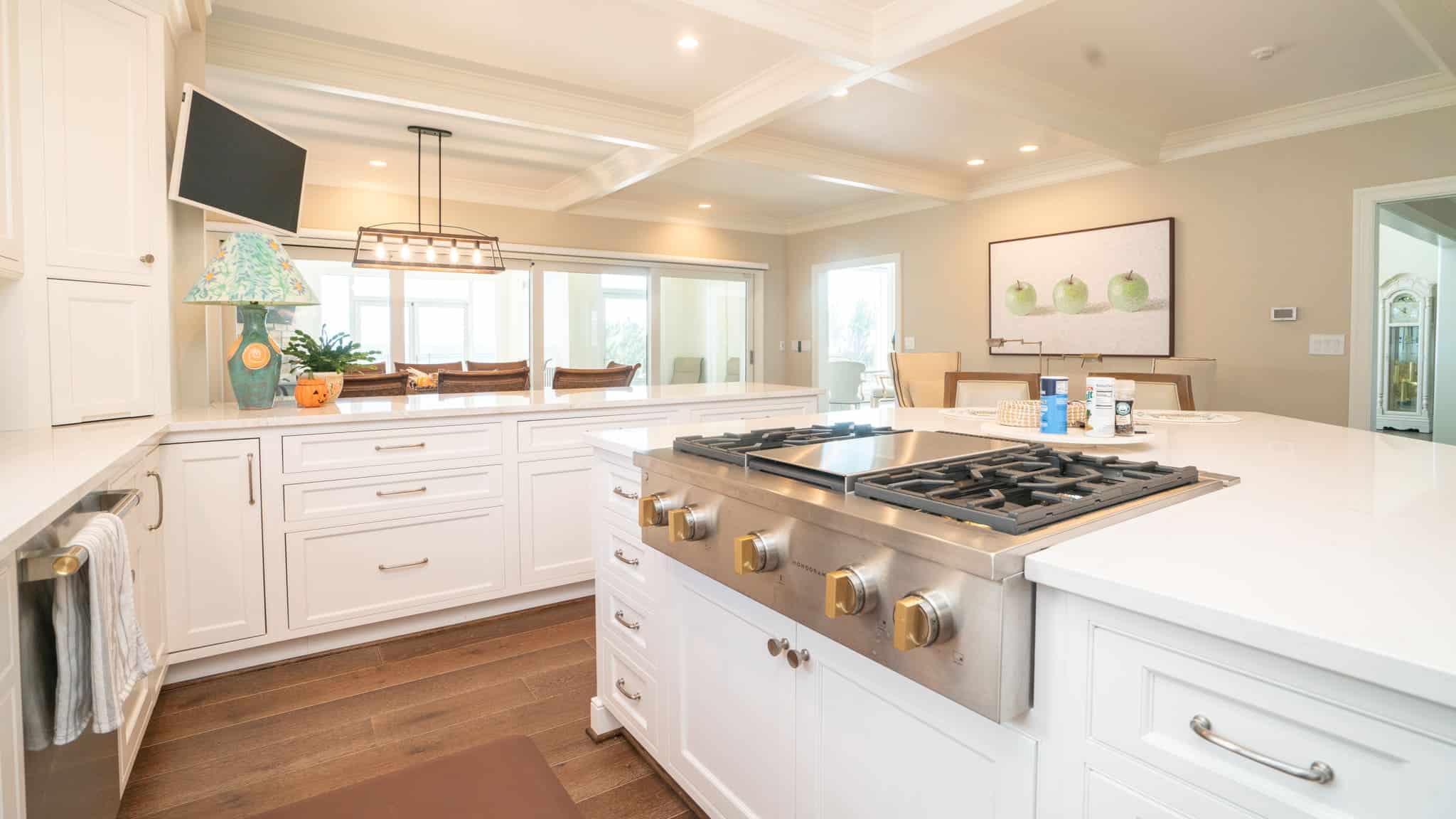
This “command center” design integrates a professional range into a large island, keeping the cook engaged with the home. White Shaker cabinetry and gold hardware transform this high-performance utility into sophisticated furniture.
A coffered ceiling adds architectural depth, while large sliding doors flood quartz surfaces with natural light. This layout balances professional cooking demands with the airy atmosphere of modern open-concept living.
Farmhouse Elegance with Modern Connectivity
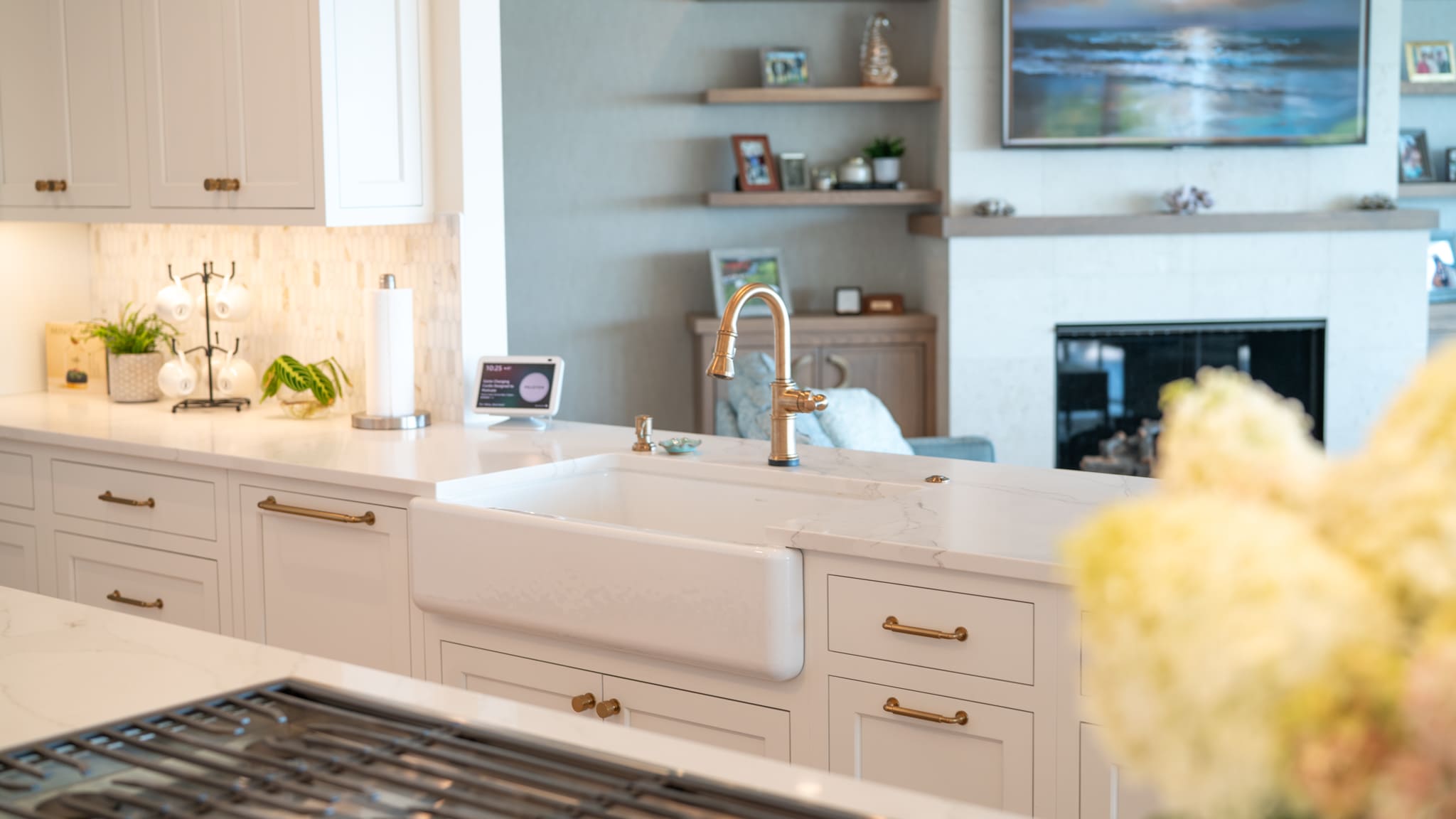
This design seamlessly blends classic farmhouse elements with a modern, open-concept flow. The deep apron-front sink serves as a timeless centerpiece, paired with champagne bronze hardware for a touch of contemporary warmth. By positioning the sink facing the living area, the layout ensures that cleaning and prep work don’t feel isolated, keeping the kitchen connected to the home’s social hub and fireplace views.
Coastal Texture and Warm Accents
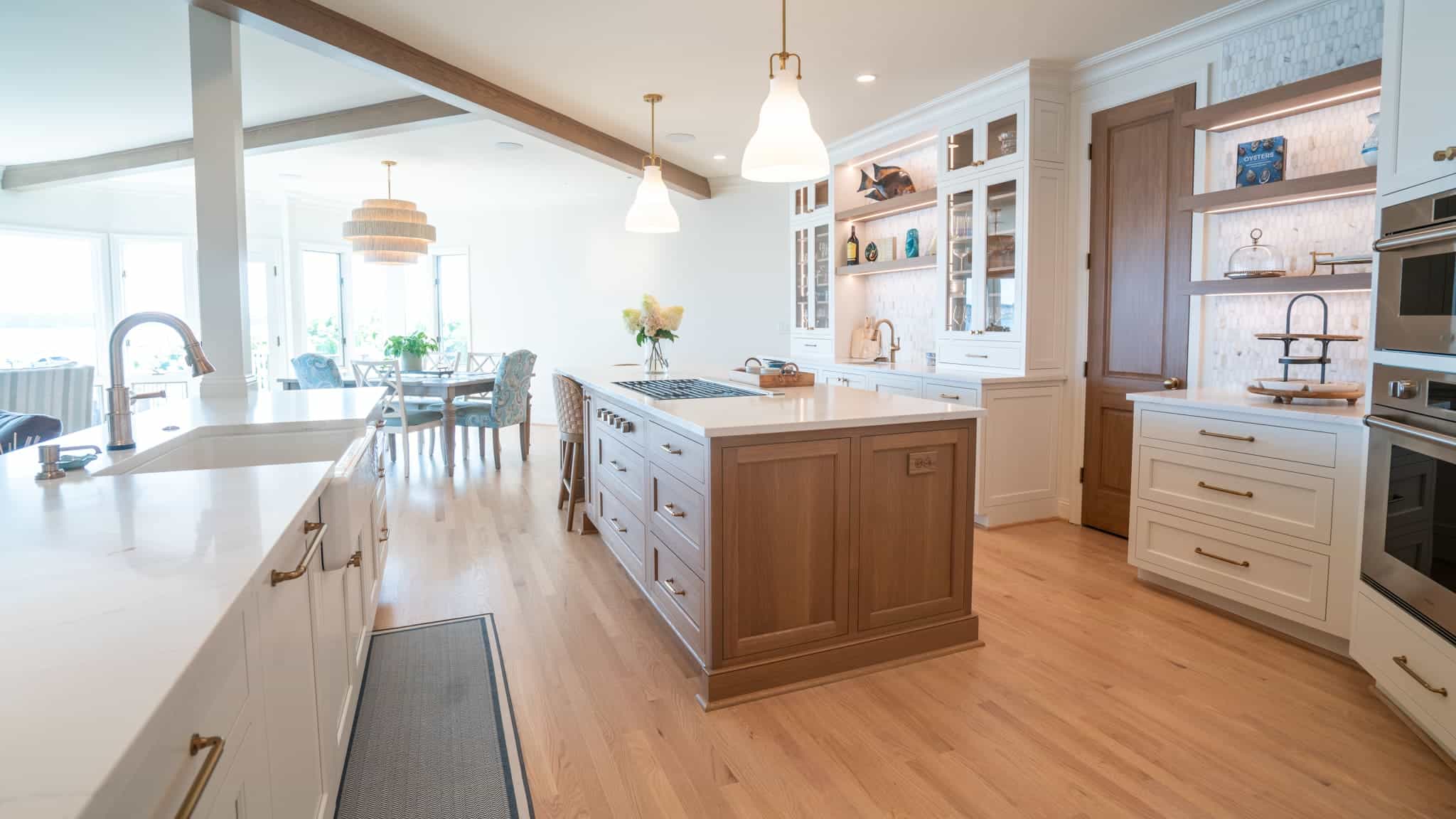
This design masters the use of organic textures to soften a bright, white kitchen. The natural wood island and matching ceiling beams provide a warm anchor, grounding the expansive floor plan.
Froehler’s signature “quiet improvements” are seen in the lit open shelving and glass-front cabinetry, which provide decorative depth without sacrificing storage, creating a space that feels both high-end and lived-in.
Ambient Lighting and Targeted Task Zones
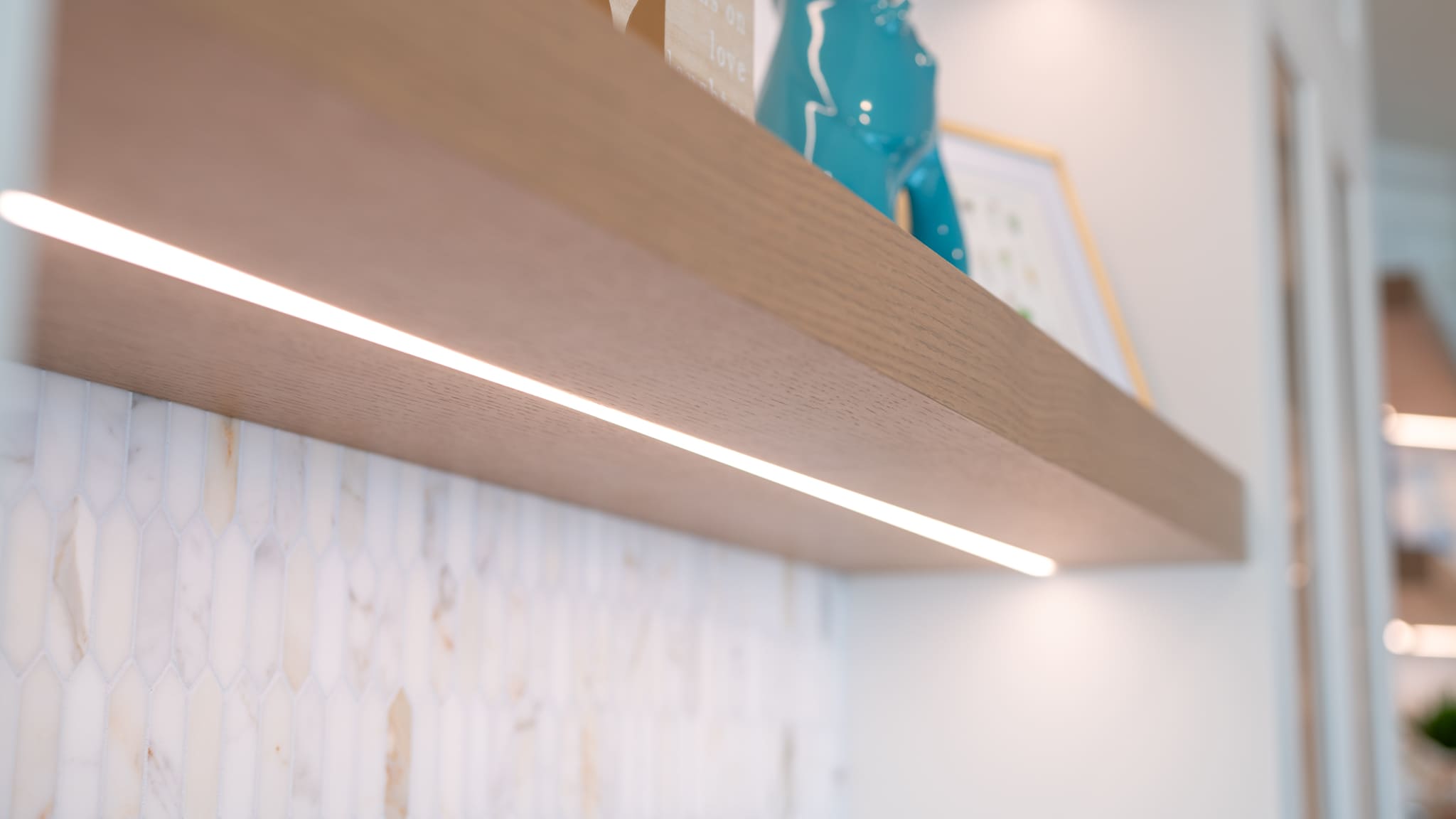
The last idea is not that innovative, but integrated LED lighting represents one of the most effective ways to balance style with everyday utility!
By recessing light strips directly into floating wood shelves, you provide soft, glare-free illumination that highlights textured backsplashes while serving as functional task lighting for the counters below. This layered lighting approach creates a warm, inviting atmosphere that transitions perfectly from a bright workspace during the day to a subtle, ambient setting for evening gatherings.
How much does a kitchen renovation cost?
Kitchen renovation cost depends on scope, layout changes, and the level of materials you choose. A cosmetic update stays in a very different range than a full remodel that involves plumbing, electrical, and structural work.
In most cases, projects fall into three broad tiers:
- A basic refresh focuses on surfaces, paint, hardware, and minor upgrades
- A mid-range renovation includes new cabinetry, updated appliances, and improved layout efficiency without major structural changes
- A high-end remodel often involves custom cabinetry, layout reconfiguration, premium materials, and integrated systems.
What tends to catch homeowners off guard is how quickly costs increase when multiple elements change at once. Moving plumbing lines, upgrading electrical panels, or expanding the footprint can shift the budget more than finishes alone.
Understanding where your project fits early on helps avoid mismatched expectations and keeps decisions aligned with your budget.
Is $10,000 enough for a kitchen remodel?
A $10,000 budget can work, but only within a limited scope.
At this level, the focus stays on surface improvements rather than full replacement. Cabinet refacing instead of new cabinets, updated hardware, fresh paint, and possibly new countertops in a smaller kitchen are realistic options. You may also be able to upgrade a few appliances if you choose carefully.
Layout changes, custom cabinetry, or significant electrical and plumbing work are typically out of reach at this price point. Labor alone can take a large portion of the budget, especially if multiple trades are involved.
If you’re working with $10,000, the key is prioritization. Focus on the elements that improve daily use or refresh the look without opening up the entire scope of construction.
What is the most expensive part of a kitchen renovation?
Cabinetry is usually the highest cost in a kitchen renovation.
Custom or semi-custom cabinets require both material and labor investment, and they define much of the kitchen’s layout and storage. Even stock cabinets can become expensive depending on size and configuration.
Labor is another major component, especially when the project involves multiple trades. Electrical, plumbing, and installation work add up quickly, particularly in older homes where updates are needed to meet current standards.
Countertops can also represent a significant portion of the budget, depending on the material. Natural stone and engineered surfaces vary widely in price, and installation adds to the total.
Appliances, while important, don’t always take the largest share unless you’re selecting high-end or professional-grade models.
What is a good budget for a kitchen renovation?
A good budget aligns with both the scope of the project and the value of the home.
For many homeowners, a mid-range budget between $25,000 and $60,000 allows for meaningful upgrades. This range typically covers new cabinets, updated appliances, improved lighting, and better materials without major structural changes.
Larger or more complex renovations can exceed $75,000, especially when the layout changes or high-end finishes are involved. In these cases, the investment often reflects both design goals and long-term use.
It’s also common to set aside an additional 10% to 20% as a contingency. Unexpected conditions behind walls or under floors can require adjustments once construction begins.
Rather than focusing on a single number, it helps to think in terms of priorities. Deciding where to invest more, in cabinetry, layout, or materials, helps create a balanced kitchen that performs well over time without overspending in less impactful areas.
How long does a kitchen renovation take?
A kitchen renovation timeline depends on the scope of work, the level of customization, and how many moving parts are involved behind the walls.
For a straightforward update, where the layout stays the same, and materials are readily available, the construction phase typically runs between 4 and 8 weeks. This assumes decisions are made early, and materials are on site when needed.
A more involved renovation, especially one that includes layout changes, custom cabinetry, or structural adjustments, often takes 8 to 16 weeks or more. The timeline expands when you factor in design planning, permitting, and material lead times, which can add several weeks before construction even begins.
Cabinet production is one of the biggest variables. Stock cabinets may be available quickly, while semi-custom and custom options can take several weeks to fabricate and deliver. The same applies to specialty appliances or unique materials.
Inspections and unforeseen conditions can also affect timing. Opening up walls sometimes reveals electrical or plumbing updates that need to be addressed before work continues.
The most reliable way to keep a project on schedule is preparation. Finalizing design decisions, confirming material availability, and working with a contractor who manages sequencing carefully can make a noticeable difference in how smoothly the project moves.
What mistakes should I avoid during a kitchen renovation?
Many kitchen renovation issues don’t come from major decisions. They come from smaller oversights that affect how the space functions once it’s in use.
One of the most common mistakes is prioritizing appearance over layout. A kitchen can look well-designed but still feel inefficient if the workflow between the sink, stove, and storage isn’t considered early on.
Another frequent issue is underestimating storage needs. Open shelving and minimal cabinetry may look clean, but they often fall short in daily use. Without enough functional storage, countertops quickly become cluttered.
Lighting is another area where shortcuts show up later. Relying on a single overhead fixture creates shadows and limits usability. Task lighting, especially under cabinets, makes a significant difference in how the kitchen performs.
Budget allocation can also create problems. Spending heavily on visible finishes while cutting back on cabinetry quality or installation often leads to frustration over time. The elements you interact with daily tend to matter more than purely decorative features.
Skipping detailed planning is another risk. Changes made mid-project, especially those involving plumbing or electrical work, can increase costs and delay the timeline. Clear decisions up front reduce the likelihood of adjustments during construction.
Finally, hiring based on price alone can lead to inconsistent results. Experience, communication, and project management tend to have a greater impact on the outcome than the initial quote.
When is the best time to renovate a kitchen?
The best time to renovate a kitchen depends on a mix of practical and scheduling factors.
From a construction standpoint, many homeowners choose late winter or early spring. Contractor availability can be more flexible before peak building season, and projects may move more efficiently without overlapping with larger exterior jobs.
Summer remains a popular option, especially for families who want to complete the renovation while schedules are more flexible. However, this is also when demand is highest, which can affect both pricing and timelines.
Fall can be a strategic choice if the goal is to have the kitchen ready for holiday gatherings. Planning needs to start well in advance to account for design, ordering, and construction time.
Beyond the calendar, personal timing matters just as much. Renovating during a period when you can manage temporary disruptions, like limited kitchen access or setting up a temporary cooking space, tends to make the process easier.
Material availability and contractor scheduling often matter more than the season itself. Starting the planning process early allows you to align both, which usually leads to a smoother renovation experience overall.
FAQs
Do I need permits for a kitchen renovation?
In many cases, yes. Permits are typically required when your renovation involves electrical, plumbing, or structural changes. Moving outlets, installing new circuits, relocating plumbing lines, or removing walls usually triggers the need for approval and inspection.
For smaller updates, like replacing cabinets or countertops without altering systems behind the walls, permits may not be necessary. That said, local requirements vary, so it’s important to confirm early in the planning process.
A contractor usually handles permitting, but you should still understand what’s being filed and why. Proper permits protect you during the project and can prevent issues if you sell the home later.
Can I live at home during a kitchen renovation?

You can, but it requires some adjustment.
During construction, your kitchen will be partially or completely unusable. Many homeowners set up a temporary space with essentials like a microwave, small refrigerator, and portable cooktop in another room.
Dust, noise, and daily crew activity are part of the process. If the renovation is extensive, especially if it involves removing walls or major system updates, some homeowners choose to stay elsewhere for part of the project.
If you plan to remain at home, clear communication with your contractor helps. Knowing the schedule and what to expect each week makes it easier to manage daily routines.
How do I choose kitchen appliances for renovation?
Start with how you use your kitchen. Cooking habits, household size, and daily routines should guide appliance selection more than brand alone.
Size and configuration matter first. Appliances need to fit the layout and support workflow without crowding the space. A well-sized refrigerator or range often has more impact than a larger, higher-end model that disrupts circulation.
Consistency also helps. Choosing appliances with a cohesive finish or integrated design can create a more balanced look, especially in open-concept kitchens.
Performance and reliability should guide the final decision. Features are useful when they align with how you cook, but they shouldn’t come at the expense of long-term dependability.
Should I replace or reface kitchen cabinets?
It depends on the condition of your existing cabinets and the goals of your renovation.
Refacing works well when cabinet boxes are structurally sound, and the layout meets your needs. It involves replacing doors and drawer fronts while keeping the existing framework. This approach can reduce cost and shorten the timeline.
Replacing cabinets makes more sense when the layout needs improvement or the existing structure shows wear. New cabinetry allows for better storage solutions, updated configurations, and improved durability.
If your renovation includes changes to workflow or appliance placement, replacement usually offers more flexibility.
How do I choose a kitchen renovation contractor?
Choosing the right contractor has a direct impact on both the process and the final result.
Look for experience with projects similar in scope. Kitchen renovations involve coordination between multiple trades, so project management matters as much as craftsmanship.
Review past work to understand quality and attention to detail. This gives you a clearer picture of what to expect beyond initial conversations.
Communication is another key factor. A contractor who explains timelines, sequencing, and potential challenges clearly will help reduce uncertainty throughout the project.
It’s also important to understand how they handle budgeting, changes, and unexpected conditions. Transparency in these areas often reflects how the project will be managed from start to finish.
Taking time to evaluate these elements upfront helps you move forward with more confidence and fewer surprises once construction begins.
Put These Design Secrets to Work in Your Kitchen
A well-executed kitchen renovation comes down to more than finishes or trends. Throughout this guide, the focus stayed on what actually shapes the outcome: layout decisions that improve flow, storage strategies that make daily use easier, and material choices that hold up over time.
You’ve seen how value is built through thoughtful planning, not just high-end upgrades. From understanding what a renovation includes to breaking down realistic costs and timelines, the goal is to help you approach the process with clarity. The ideas shared here, from cabinet organization to lighting and appliance integration, are the kinds of details that often get overlooked but make a lasting difference.
Just as important, avoiding common mistakes can protect both your budget and your experience during construction. Prioritizing function, planning, and working with the right team all contribute to a smoother project and a better result.
If you’re considering a kitchen renovation and want guidance tailored to your space, layout, and goals, we invite you to take the next step!
With the right approach, your kitchen can move beyond a visual upgrade and become a space that truly supports how you live every day.