
Planning a new space begins with inspiration. A successful bathroom renovation requires more than just saving a bathroom ideas photo gallery. You must navigate a complex construction process to bring those concepts to life.
Aligning your design aspirations with a realistic budget is a common challenge for homeowners. Focusing exclusively on visible finishes leaves critical structural details ignored. The biggest industry secret is that proper construction prioritizes the elements hidden entirely behind your walls.
Quality framing, advanced waterproofing, and updated plumbing dictate the true lifespan of your project. A poorly constructed room will fail regardless of how expensive the tile looks on the surface.
We will break down exactly what happens during a professional build and share the contractor secrets that protect your investment.
Bathroom renovation meaning
Homeowners frequently use the terms “remodel” and “renovate” interchangeably. A lesser-known secret in the industry is how these terms define entirely different scopes of work and pricing structures. Evaluating 10 things to consider before a custom bathroom remodel helps you set accurate expectations for your timeline.
A cosmetic update is strictly surface-level work. This involves painting walls or swapping out cabinet hardware. The underlying structure remains untouched.
A true bathroom renovation involves updating the existing space to function like brand new. You generally maintain the current layout and footprint. The process requires removing old materials down to the bare wall studs and the subfloor. Our construction teams always begin with this thorough structural assessment.
A professional team assesses the exposed framing for hidden water damage. The EPA provides strict guidelines for managing moisture and mold that reputable builders follow when repairing structural rot. Plumbers update outdated water supply lines to modern standards. Electricians ensure the circuitry can handle the demands of modern appliances.
A remodel changes the physical layout of the home. It involves moving structural walls to steal square footage from an adjacent room. Relocating a toilet or a shower drain across the room falls under a remodel. This level of work is more closely related to a large-scale home addition and requires extensive architectural planning.
What adds the most value in a bathroom renovation?
Investing in your home requires selecting features that offer both daily function and long-term durability. The secret to a high return on investment rarely comes from selecting the most expensive decorative fixtures. Value is generated by creating a highly functional layout built with lasting materials.
Data from the National Association of Home Builders (NAHB) “What Home Buyers Really Want” study indicates that over 80 percent of buyers consider a double vanity essential or highly desirable in a primary suite. Upgrading to a double vanity is a secure investment for prospective buyers. A primary suite requires adequate storage and personal space.
“We consistently see how layout choices impact property value,” explains Michael Froehler, cofounder and partner from J. M. Froehler Construction.
“When we reference NAHB research with our clients, it is to ensure their remodel serves their immediate needs while securing long-term equity. A double vanity is almost always non-negotiable for modern buyers.”
Replacing an underutilized bathtub with a spacious walk-in shower is another major selling point. Modern homeowners prioritize the daily convenience of a large shower over a tub. This upgrade makes sense, provided your home retains at least one bathtub in a secondary location.
Proper lighting transforms the entire feel of the space. A single fixture mounted above the mirror casts heavy shadows across the face. A high-value plan incorporates recessed ceiling lights for ambient brightness. Wall-mounted sconces at eye level provide excellent task lighting.
Premium waterproofing is the most critical value factor. A poorly kept secret among repair specialists is that a beautiful installation lacking proper moisture barriers will begin rotting quickly. Utilizing high-end waterproof membranes protects your investment for decades.
“Homeowners naturally focus on the tile and fixtures. The real secret to a bathroom that lasts a lifetime is the moisture management and structural framing hidden completely out of sight.” – Michael Froehler.
How much does a bathroom renovation cost?
Determining project costs depends heavily on your location and the grade of materials selected. The age of your home also dictates how much hidden repair work is required once the walls are opened.
Understanding the breakdown between labor and materials helps you set realistic expectations.
Can you redo a bathroom for $5,000?
A professional contracting company cannot complete a full renovation for $5,000. This budget accommodates a basic cosmetic update for a very small powder room or a minor restroom remodeling project. A professional could swap out a pre-fabricated vanity and install a new toilet at this price point.
Custom tile work or shower alterations are impossible within this budget when hiring licensed tradespeople. Homeowners targeting a project for under $3,000 are strictly executing DIY work. The entire budget goes toward base-level materials like paint and peel-and-stick flooring.
Can you renovate a bathroom for $10,000?
This budget serves as a starting point for a standard guest space. You must make highly economical choices to hit this number. A professional team can handle a full tear-out of a smaller room for $10,000.
You can expect the installation of a new fiberglass tub surround instead of custom tile. The project includes standard ceramic floor tile and a mid-grade vanity. The absolute requirement for staying near this number is maintaining the exact existing footprint.
What is a realistic budget for a bathroom renovation?
A custom project involving a down-to-the-studs approach typically falls between $15,000 and $25,000. The annual Cost vs. Value Report by Remodeling Magazine consistently shows that upscale midrange projects recoup approximately 50 to 60 percent of their cost at resale. This budget covers custom tile work in the shower and a heavy-duty frameless glass enclosure.
A common secret bad contractors hide is underbidding the structural work to win a job. This tactic inevitably surprises you with massive change orders later.
“We believe in complete transparency from day one,” explains Matt Froehler, cofounder and partner from J.M. Froehler Construction. “A realistic budget allows us to perform the critical rough-in work upfront, replacing old valves and applying top-tier waterproofing systems without cutting corners.”
Skilled labor accounts for a significant portion of a realistic budget. Experienced plumbers and expert tile setters charge for their specialized knowledge. Their expertise prevents catastrophic leaks and ensures your home remains safe.
Estimated Cost Breakdown
| Renovation Type | Estimated Budget Range | Scope of Work |
| Cosmetic Update | $5,000 to $8,000 | Paint, new hardware, and pre-fab vanity replacement. |
| Standard Guest Bath | $10,000 to $15,000 | Fiberglass surround, standard tile, footprint unchanged. |
| Custom Primary Suite | $15,000 to $35,000+ | Custom tile, frameless glass, plumbing updates, and premium fixtures. |
Bathroom renovation ideas
Selecting design features requires balancing visual impact with lasting functionality. Highly trendy finishes often look dated within a few short years.
The secret to a timeless design is focusing on architectural upgrades that serve as striking focal points while improving your daily routine. Explore our recent transformations to see how these elements are photographed in real homes.
1. Freestanding Luxury and Continuous Tile
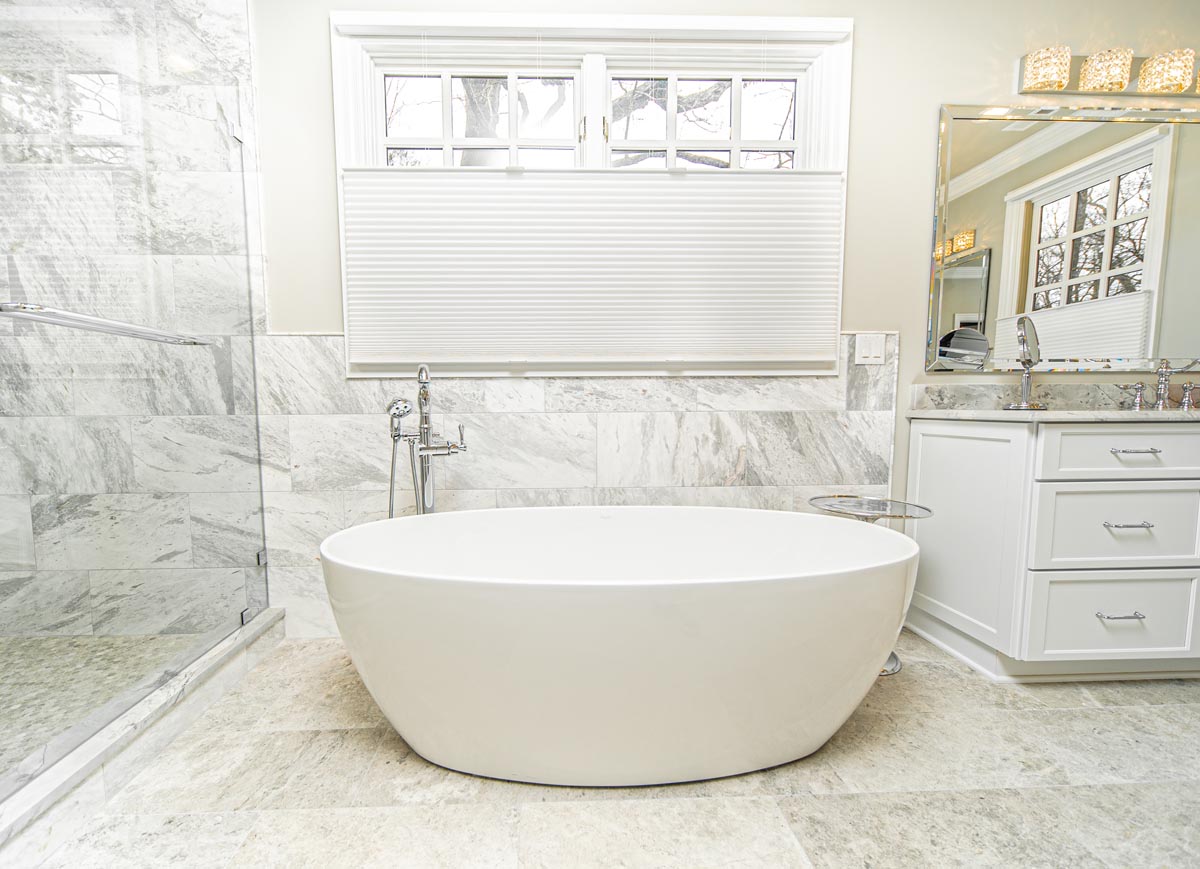
This design maximizes visual impact by pairing a sculptural freestanding soaking tub with an uninterrupted marble-tile backdrop.
Running the tile seamlessly across the lower walls and into the glass-enclosed shower removes visual barriers, instantly making the room appear much larger and more cohesive. The combination of clean lines, abundant natural light, and classic stone provides a timeless, spa-like aesthetic.
2. Floor-to-Ceiling Tile and Dedicated Vanity Zones
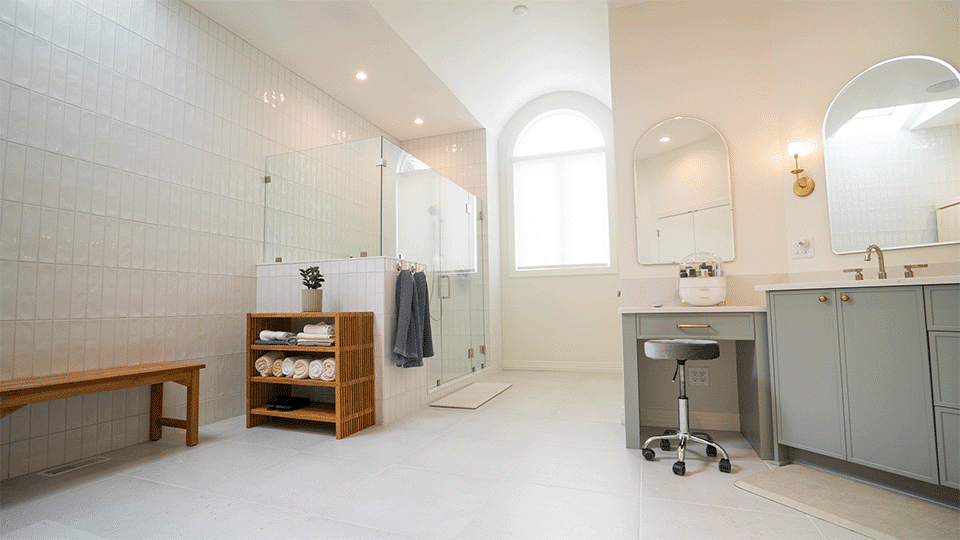
This layout utilizes architectural design techniques to dramatically expand the visual perception of the room.
Running large-format vertical wall tiles completely to the ceiling draws the eye upward to highlight the height of the space. The design features a frameless clear glass shower enclosure to eliminate visual barriers, paired with a dedicated vanity and integrated makeup station that maximizes daily functional flow.
3. Contrast and Classic Symmetry
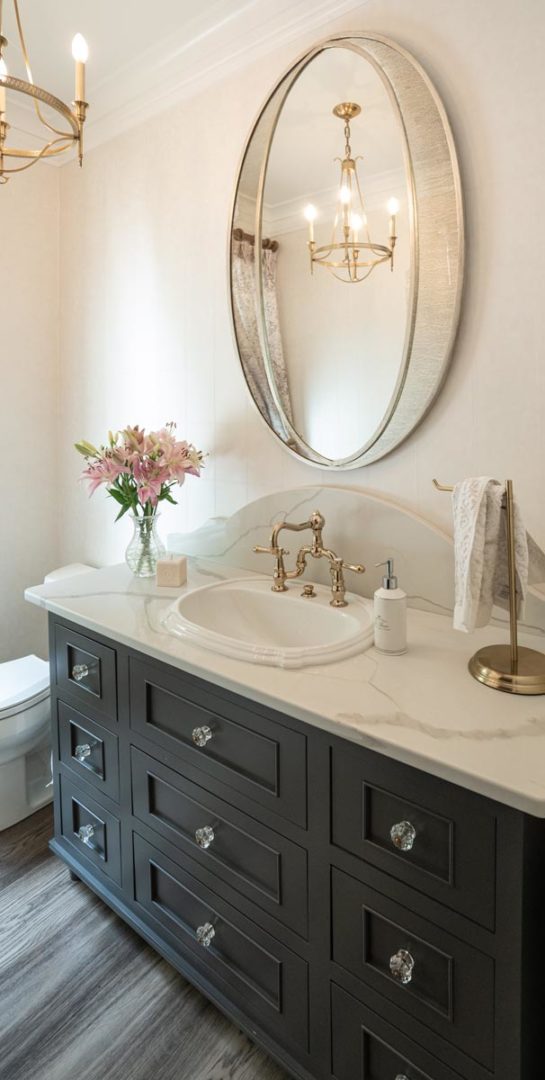
- High-Contrast Focal Point: A deep charcoal vanity instantly anchors the room, creating a striking contrast against white stone countertops and light walls.
- Elegant Detailing: Incorporating an arched
backsplash and vintage-inspired brass plumbing fixtures provides timeless architectural interest. - Reflective Depth: An oversized oval mirror paired with classic glass cabinet knobs catches ambient light, adding a sense of luxury and space without altering the physical footprint.
4. Expansive Primary Suites with Central Storage
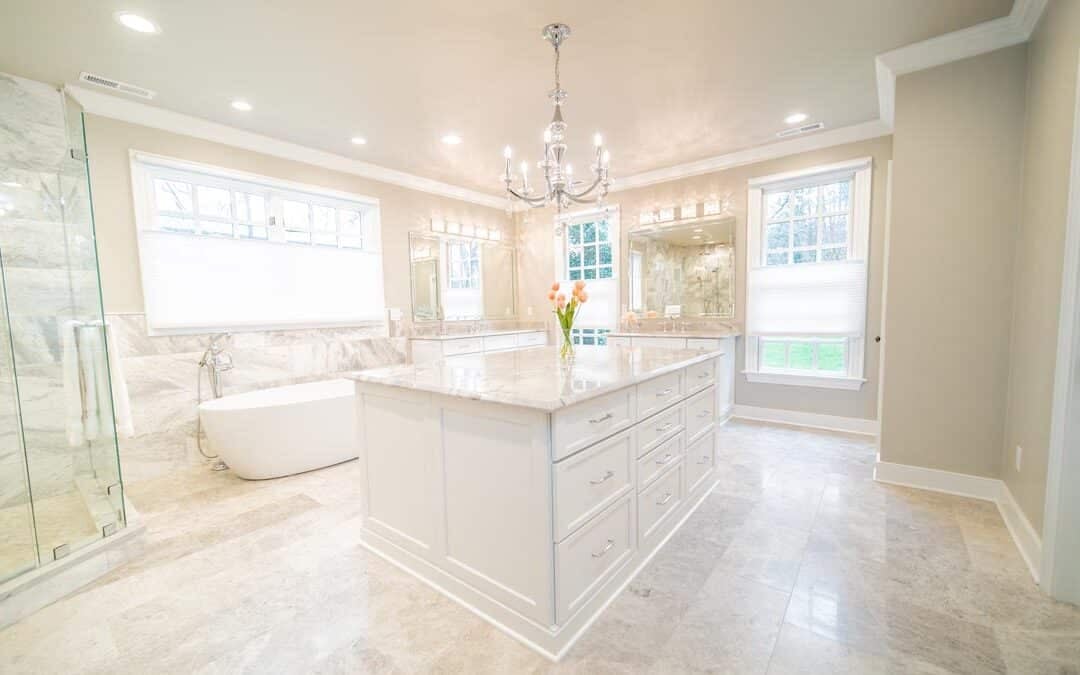
- Centerpiece Island Function: Introducing a custom island into a large primary suite provides maximum storage and an additional countertop surface for daily routines.
- Layered Luxury Lighting: Combining natural light from multiple windows with recessed ceiling fixtures and a striking central chandelier eliminates harsh shadows and creates ambient warmth.
- Spacious Open Layout: Swapping cramped spaces for an open-concept flow accommodates a freestanding soaking tub and a custom-tiled, frameless glass shower enclosure seamlessly.

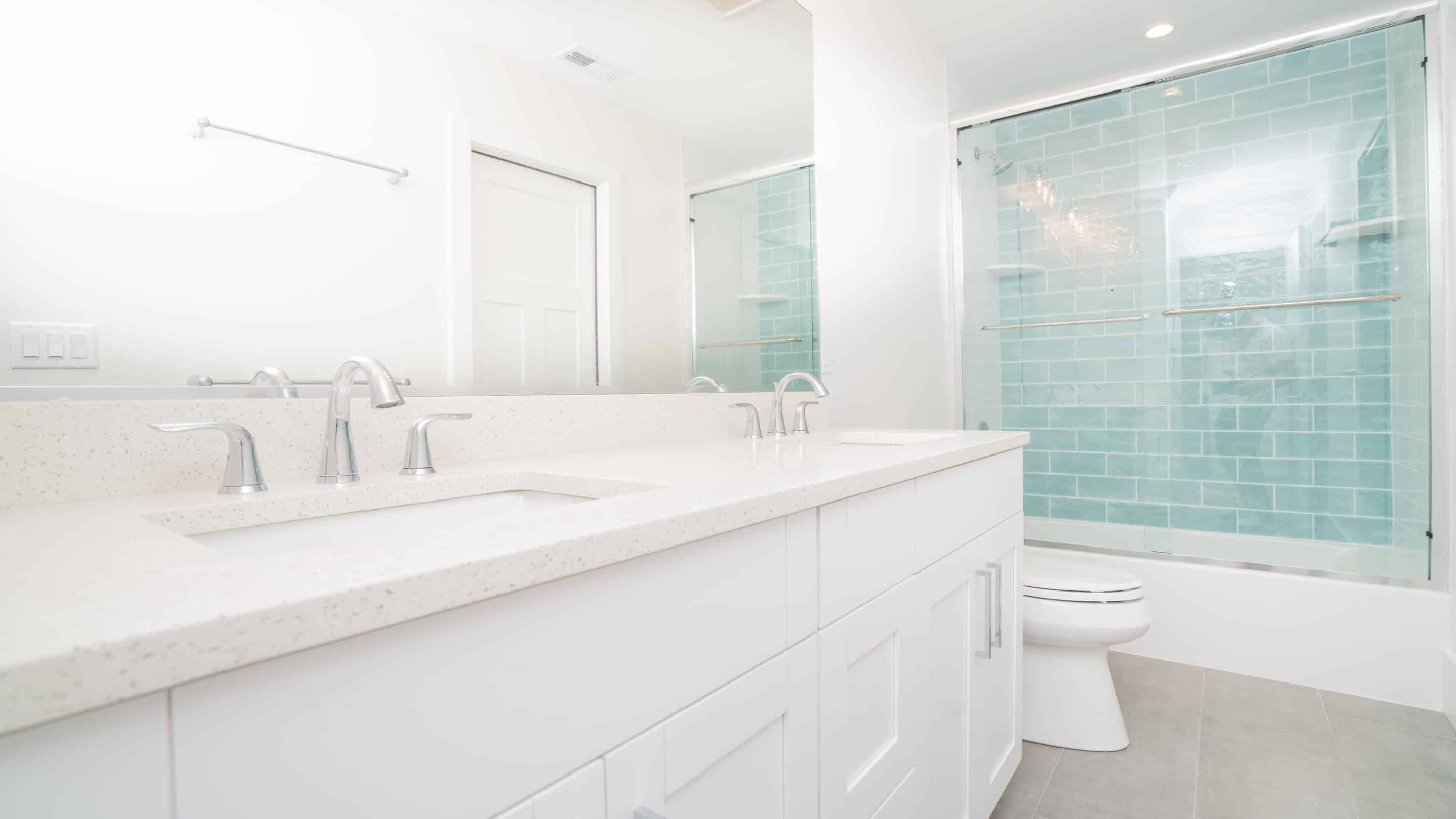
5. High-Value Double Vanities and Bold Accent Tile
Investing in a custom double vanity secures long-term property equity while providing the personal space and essential storage modern buyers demand in a primary layout.
This design complements the expansive white cabinetry and non-porous quartz countertops with a striking, sea-glass blue subway tile enclosure.
By utilizing a frameless glass slider, the layout eliminates visual barriers to make a standard-size room feel significantly larger and beautifully flooded with light.
Discussing these options with a professional ensures your choices fit your specific layout. Learn more about our approach to a complete bathroom renovation in Virginia Beach.
What is the most expensive part of a bathroom renovation?
Homeowners often assume that custom glass doors or natural stone countertops consume the majority of the budget. Labor and structural layout changes actually represent the highest hidden costs in any major home project.
Master plumbers and specialized tile setters command high hourly rates based on their technical expertise. You pay for their ability to execute complex installations flawlessly while adhering to strict building codes.
Michael advises:
“The secret to keeping your budget intact is maintaining your existing plumbing footprint. Relocating a toilet requires tearing up the subfloor and rerouting major waste lines, which adds thousands of dollars before any decorative materials even arrive.”
Best materials for bathroom renovation
Wet environments endure daily abuse from dense steam and standing water. Selecting the proper materials ensures the room survives these harsh conditions. Subpar products lead to premature material failure.
What type of shower is best for a renovation?
Custom-tiled enclosures using large-format porcelain tile offer the highest durability. Porcelain is incredibly dense and nearly impervious to water absorption. Using larger tiles reduces the number of grout lines in the enclosure.
Grout requires maintenance and serves as the primary location for mold growth. Multi-piece acrylic surrounds offer a highly functional alternative when budget is the primary concern. Modern acrylic materials are seamless in the corners and resist staining effectively.
What flooring is best for bathrooms?
Porcelain tile remains the industry standard for wet areas. The high firing temperature makes it virtually waterproof and highly resistant to scratching. Evaluating the dynamic coefficient of friction (DCOF) standards ensures the material you select is safe and slip-resistant when wet.
Luxury Vinyl Plank (LVP) provides a budget-friendly option that feels softer underfoot. Natural hardwood or standard laminate flooring should never be installed in wet areas. Ambient humidity and small splashes cause these materials to warp rapidly.
What are the best materials for bathroom countertops?
Quartz is the premier choice for custom vanities. The engineered stone is manufactured by binding crushed natural quartz with specialized resins. This process creates a completely non-porous surface. Quartz never requires sealing and resists stubborn stains.
Granite offers incredible natural beauty and excellent durability. The natural stone is porous and requires periodic chemical sealing. Marble presents a classic aesthetic, but is a very soft stone that easily etches when exposed to acidic cosmetics.
What waterproofing is required in a bathroom renovation?
Tile and grout are completely porous materials. The secret to a leak-proof shower is that the actual waterproofing system must exist entirely behind the tile layer. Water and vapor routinely pass through the surface of your shower walls.
Professional installations rely on modern sheet membrane systems applied over specialized foam backer boards. Liquid-applied elastomeric membranes painted thickly over cement board provide another highly effective option.
A closely guarded secret among budget contractors is the use of water-resistant drywall inside a shower enclosure. Relying on this material violates modern best practices. Reputable construction teams abandoned this risky method decades ago.
“We never rely on greenboard for shower enclosures,” states Michael Froehler.
Following the Tile Council of North America (TCNA) guidelines means using dedicated sheet membranes to guarantee a truly waterproof environment for our clients.
Is a walk-in shower worth it?
Converting a cramped tub combination into a dedicated walk-in shower is a highly profitable upgrade. The open design dramatically improves the daily user experience.
Removing physical barriers makes the entire room feel significantly larger. This specific design appeals strongly to buyers looking to age in place safely.
Should I replace or refinish my bathtub?
A comprehensive project requires replacing the existing tub entirely. Refinishing involves painting the old surface with an epoxy coating. This temporary cosmetic fix typically begins chipping within a few years.
Abrasive cleaners easily scratch the fragile new coating. Installing a new acrylic or cast-iron tub ensures you will not address a failing finish down the road.
What lighting works best in a renovated bathroom?
A single light fixture mounted above the mirror creates poor visibility for daily tasks. A layered lighting plan solves this problem effectively. The Department of Energy provides excellent resources on lighting choices, recommending bulbs between 2700K and 3000K for flattering residential lighting.
Start with general overhead lighting using recessed LED fixtures distributed evenly across the ceiling. Add task lighting by mounting wall sconces at eye level beside the mirror. Install dedicated wet-rated recessed lighting directly inside the shower enclosure.
How can I make a small bathroom look bigger?
You cannot add physical square footage without moving structural walls. Design techniques can easily trick the eye into perceiving a much larger space. Maximize the visible floor area. Exposing the flooring underneath a wall-mounted vanity creates an immediate sense of openness.
Swap heavy shower curtains for a completely frameless clear glass enclosure. Removing visual barriers allows the eye to travel from the doorway to the back wall uninterrupted.
Large-format tiles work incredibly well in small spaces. The reduced number of grout lines makes the room feel less fragmented. Running the wall tile completely up to the ceiling draws the eye upward to highlight the height of the room.
Should plumbing and electrical be updated during renovation?
Opening the walls down to the bare studs presents a mandatory opportunity to update vital systems. Leaving old galvanized steel pipes hidden behind brand-new drywall is a massive financial risk.
A licensed plumber can easily swap failing water lines for durable PEX tubing while the walls are accessible. An electrician will ensure your circuits meet modern safety codes. This is the exact time to add GFCI-protected outlets near water sources, as mandated by National Electrical Code (NEC) requirements to prevent shock hazards.
Dedicated circuits must be run for high-draw items like radiant floor heating. Properly venting the exhaust fan through the roof prevents severe mold growth in the attic. Completing this rough-in work protects your decorative investment from hidden leaks.
FAQs
How long does a bathroom renovation take?
A cosmetic update, keeping the same footprint, typically takes three to four weeks. A custom project involving complex tile work usually takes four to eight weeks. Delays frequently result from custom materials taking several weeks to manufacture and ship.
Do I need permits for a bathroom renovation?
Moving plumbing lines or altering structural joists requires building permits from your local municipality. Check with your local building department for specific regional compliance requirements. A licensed contractor handles the entire permitting process and ensures all work passes city inspections.
Can I use my bathroom during renovation?
The water supply lines are capped off during construction. All fixtures are completely removed from the space. The room becomes an active construction zone. You will need to rely entirely on a secondary bathroom in your home for the full duration.
How do I choose a bathroom renovation near me?
Hire a fully insured professional who specializes in kitchen and bath remodeling. Whether you are upgrading a residential suite or exploring the top benefits of commercial remodeling in Virginia, you need a construction partner with proven experience. Check their portfolio for quality finish work and read independent reviews. A bid that comes in significantly lower than competing offers guarantees cut corners.
What warranties are included in bathroom renovation work?
You receive a manufacturer’s warranty on the physical materials. You should also receive a workmanship warranty from your contractor covering the actual labor. A reputable workmanship warranty covers one to two years of protection. Secure this warranty in writing before signing any contract.
How do I prepare my home for a bathroom renovation?
Remove all toiletries and personal items from the space completely. Clear a direct path from your exterior door to the work area. The construction crew needs space to carry heavy materials without damaging your walls. The contractor handles laying down heavy-duty floor protection to secure your home.
When is the best time to renovate a bathroom?
The work is contained entirely indoors and can be executed successfully year-round. Contractors are generally booked solid during the spring months. Scheduling your project during the winter often results in better contractor availability.
Plan Smarter and Renovate with Confidence
A successful build requires deep knowledge of construction science and careful attention to structural details. The true value of your investment lies in the critical systems hidden behind the drywall.
Securing modern waterproofing and updating vital plumbing infrastructure are the essential pillars of a project built to last. Understanding realistic costs and prioritizing durable materials puts you in a superior position. You need a construction partner who prioritizes complete transparency and uncompromised craftsmanship.
We bring the expertise and clarity required to turn your plans into a beautifully crafted reality. Reach out to discuss your vision for bathroom remodeling in Virginia Beach with J.M. Froehler Construction today.