
Adding more living space is one of the most effective ways to make your home work better for your family’s needs. Whether you’re planning a larger kitchen, a first-floor primary suite, a home office, or additional space for entertaining, a home addition can improve both functionality and long-term property value.
“The challenge for many homeowners is understanding what the project will actually cost!” – This is one of Matt Froehler’s statements, cut off from an interview that will inform the content of this article.
This guide breaks down the costs of home additions, explains the factors that influence pricing, reviews financing options, highlights which additions offer the greatest return on investment, and answers common questions homeowners have before expanding their living space.
Knowing where your money goes before construction begins helps you make informed decisions about design, scope, and priorities. It also allows you to compare proposals more confidently and plan for both expected and unexpected costs throughout the project. Keep reading for more!
What Is a Home Addition?
According to J.M. Froehler Construction’s partner, Matt Froehler, “a home addition is a construction project that increases the livable square footage of an existing home.” And he continues:
“Unlike a remodel, which updates or reconfigures existing spaces, an addition creates entirely new living areas by expanding the home’s footprint or adding another level.”
Home additions can serve many purposes, including accommodating a growing family, creating dedicated workspaces, improving accessibility, or enhancing the home’s resale value. Because these projects involve structural work, they often require architectural plans, engineering, permits, and coordination between multiple trades.
Common examples include:
- Primary suite additions
- Family room expansions
- Second-story additions
- Sunrooms
- Home offices
- Guest suites
- In-law suites
- Expanded kitchens
When thoughtfully designed, a home addition can blend seamlessly with the original structure, making the new space feel like it has always been part of the home.
What Is the Difference Between an Extension and an Addition?
The terms extension and addition are often used interchangeably, but they have slightly different meanings.
A home extension enlarges an existing room or area. For example, extending a kitchen to create more dining space or expanding a family room to improve the layout would generally be considered an extension.
A home addition creates an entirely new space that didn’t previously exist. Examples include adding a bedroom, a second-story suite, or a detached guest house.
“In practice, many construction professionals use the terms interchangeably because both involve expanding the home’s usable square footage. The most important distinction is whether you’re enlarging an existing space or creating a new one.” – Matt Froehler.
What Is a Room Addition?
According to Together Design & Build, “a room addition involves adding a single new room or space to your existing home structure.”
In other words, it involves building a single new room that connects to the existing home and serves a specific purpose.
Popular room additions include:
- Bedrooms
- Home offices
- Playrooms
- Family rooms
- Dining rooms
- Sunrooms
- Guest rooms
Compared with whole-home expansions, room additions are often a more manageable way to gain additional living space while allowing homeowners to focus their investment on the area that provides the greatest benefit.
For homeowners in Virginia Beach, room additions are frequently chosen to improve everyday functionality without the expense of moving to a larger home. A well-designed addition can complement the home’s architecture while providing the extra space needed for changing lifestyles.
How Much Does a Home Addition Cost?
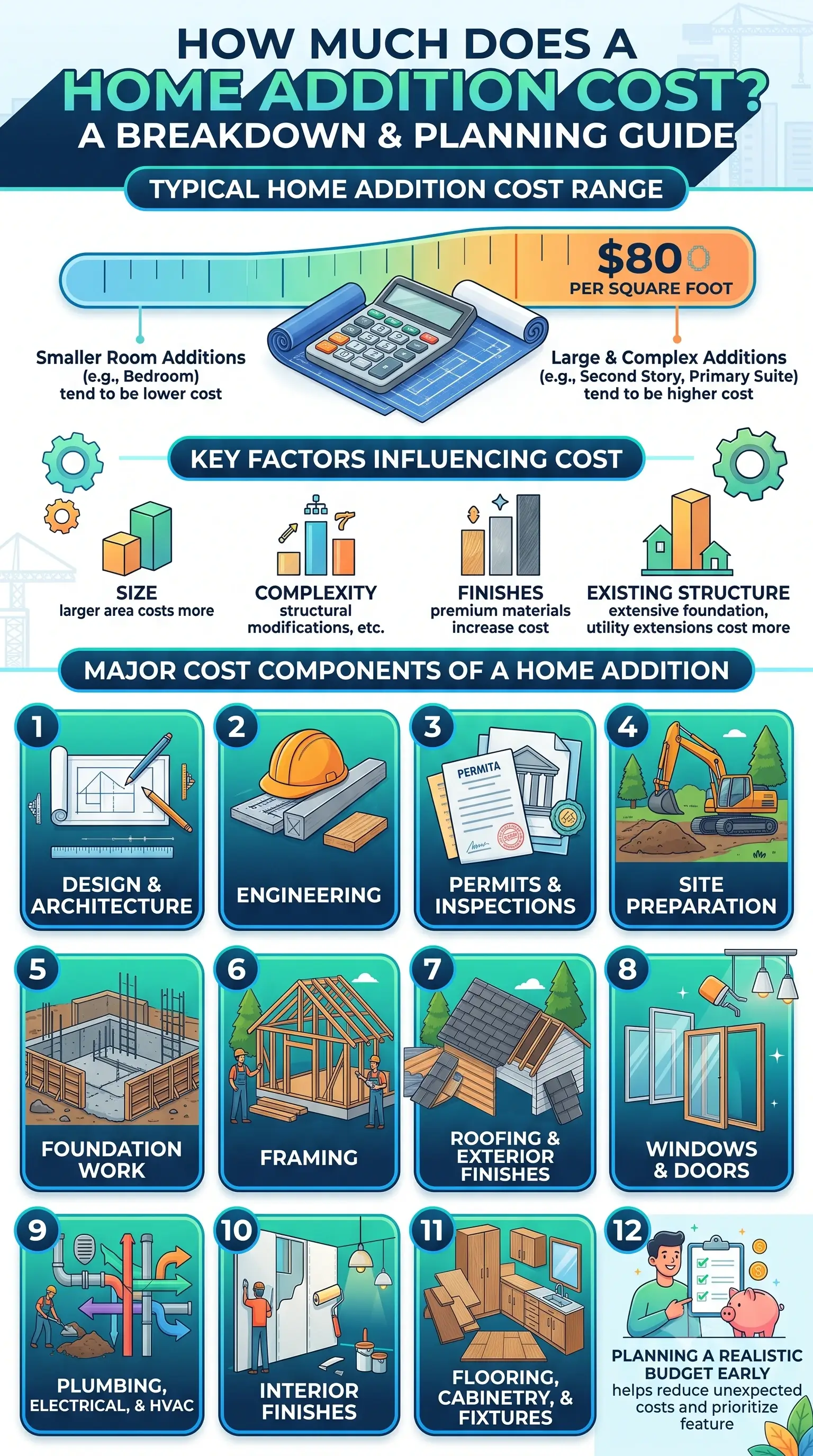
The cost of a home addition varies depending on its size, complexity, finishes, and the existing home’s structure. Projects that require extensive foundation work, structural modifications, plumbing, or HVAC extensions typically cost more than additions that expand living space without major utility changes.
According to HomeAdvisor and Fixr, home additions typically cost between $80 and $300 per square foot, depending on the project’s size, complexity, materials, and local labor rates. Smaller room additions generally cost less, while projects such as second-story additions or primary suite expansions can require a significantly larger investment because of the structural work, utility connections, and finishes involved.
Your final investment is generally made up of several components, including:
- Design and architectural services
- Engineering
- Permits and inspections
- Site preparation
- Foundation work
- Framing
- Roofing and exterior finishes
- Windows and doors
- Plumbing, electrical, and HVAC
- Interior finishes
- Flooring, cabinetry, and fixtures
Planning a realistic budget early in the design process helps reduce unexpected costs and allows you to prioritize the features that matter most.
What Is the Most Affordable Type of Home Addition?
Smaller, less complex additions are generally the most budget-friendly.
Some of the most affordable options include:
- Bump-out additions that expand an existing room
- Sunrooms or three-season rooms
- Home office additions
- Laundry room additions
- Single-room expansions without extensive plumbing
Projects that can use existing utility connections and require minimal structural changes often cost less than additions involving kitchens, bathrooms, or multiple stories.
What Is the Most Expensive Part of a Home Addition?
While every project is different, the largest expenses typically involve the structural components of the addition and the skilled labor required to build it.
Common high-cost elements include:
- Foundation construction
- Structural framing
- Roofing integration
- Plumbing installation
- Electrical work
- HVAC extensions
- High-end windows and exterior finishes
- Custom cabinetry and millwork
Kitchen and bathroom additions often carry higher costs because they combine structural work with plumbing, electrical, ventilation, cabinetry, countertops, and premium fixtures.
How Do I Finance a Home Addition?
Many homeowners finance additions rather than paying the entire project cost upfront. The best option depends on your financial situation, available home equity, and long-term goals.
Common financing methods include:
- Home equity loans
- Home equity lines of credit (HELOCs)
- Cash-out refinancing
- Construction loans
- Personal loans
- Savings or cash payments
Before selecting a financing option, compare interest rates, repayment terms, and total borrowing costs. Speaking with both your lender and contractor early in the planning process can help you establish a realistic budget before construction begins.
Will a Home Addition Increase Property Taxes?
In many cases, yes. Because a home addition increases the size and potentially the market value of your property, the local tax assessor may reassess your home’s value after the project is completed.
The exact impact depends on several factors, including:
- The size of the addition
- The type of space being added
- Local property tax rates
- Assessment practices in your municipality
For homeowners in Virginia Beach, it’s a good idea to factor potential property tax changes into your long-term budget. An experienced contractor can help you understand the permitting process and explain how your addition may affect the overall value of your home, allowing you to make informed decisions before construction begins.
What Additions Add the Most Value to a Home?

While every property is unique, certain home additions consistently deliver a stronger return on investment because they improve both functionality and buyer appeal. The most valuable projects are those that feel like a natural extension of the home rather than an afterthought.
Some of the additions that often provide the greatest value include:
- Primary suite additions
- Kitchen expansions
- Family room additions
- Finished bonus rooms
- Home office additions
- In-law suites
- Second-story additions
- Four-season sunrooms
“The highest return comes from projects that solve practical needs while matching the home’s existing architecture, materials, and layout. Quality craftsmanship and thoughtful design typically have a greater impact on resale value than simply adding square footage.” – Matt Froehler
Is a Home Addition Worth the Investment?
For many homeowners, yes. A well-designed home addition can improve everyday living while increasing the property’s market value.
Beyond potential resale benefits, an addition allows homeowners to customize their current home instead of paying the costs associated with moving. This can be especially valuable if you already enjoy your neighborhood, school district, or location.
An addition may be a worthwhile investment if you:
- Need more living space
- Want to avoid relocating
- Plan to remain in your home for several years
- Have sufficient lot space for expansion
- Want to improve both functionality and long-term value
Working with an experienced builder helps ensure the new space complements the original home, maximizing both enjoyment and return on investment—just as homeowners Alexander and Janice Chako experienced firsthand when they decided to expand their beach home:
“We hired the Froehler Brothers Matthew and Mike to do an extensive renovation and addition… Right from the start of the project, it was clear they were professional, honest, expert, friendly, and communicative… Not only did they develop a timely working plan and adhered to the timeline, but the inevitable adjustments and revisions were melded smoothly along the way. They delivered an exquisite home addition that blends perfectly with our original structure.” — Alexander and Janice Chako
What Types of Home Additions Are Most Common?
Home additions come in many forms, and the right option depends on your family’s needs, available space, and budget.
Some of the most common types include:
- Room additions
- Kitchen expansions
- Primary suite additions
- Second-story additions
- Sunrooms
- Home office additions
- Garage conversions
- In-law suites (Accessory Dwelling Units where permitted)
- Family room additions
- Mudrooms and laundry room additions
Each type offers different benefits, and many homeowners choose a project that addresses their immediate needs while supporting future resale value.
What Is the Cheapest Type of Home Addition?
The most affordable home additions are typically those that require minimal structural work and few utility modifications.
Examples include:
- Small bump-out additions
- Enclosed porches
- Simple sunrooms
- Home office additions
- Laundry room expansions
Because these projects usually involve less excavation, framing, plumbing, and HVAC work, they often cost significantly less than adding a kitchen, bathroom, or second story.
Rather than focusing solely on the lowest initial cost, it’s worth considering which addition provides the greatest long-term value for your home and lifestyle.
How Do I Prepare My Home for Construction?
Preparing your home before construction begins helps protect your belongings and allows the project to move more efficiently.
Before work starts, homeowners should consider:
- Removing furniture and valuables from the construction area
- Protecting nearby rooms from dust
- Creating clear access for workers and equipment
- Relocating vehicles from the driveway when necessary
- Making arrangements for children and pets during active construction
- Discussing the construction schedule with your builder
- Identifying temporary living arrangements if utilities will be interrupted
If you live in Virginia Beach or the surrounding Hampton Roads area, it’s also helpful to discuss local permitting timelines, inspection schedules, and weather considerations with your contractor before construction begins. A builder who plans thoroughly and communicates clearly throughout the project can help minimize disruptions while delivering a finished addition that integrates seamlessly with your existing home.
FAQs
Do I Need Permits for a Home Addition?
Yes. Most home additions require building permits because they involve structural work and must comply with local building codes and zoning regulations. Depending on the scope of your project, separate permits may also be required for electrical, plumbing, mechanical, or HVAC work.
If you’re planning a home addition in Virginia Beach, permit requirements may vary based on your property’s zoning, the size of the addition, and the type of work being performed. An experienced local contractor can help navigate the city’s permitting and inspection process to keep your project moving forward.
How Much Value Does a Home Addition Add?
A home addition can significantly increase your property’s value, but the exact return depends on the type of addition, the quality of construction, and your local real estate market.
Projects such as primary suite additions, kitchen expansions, and well-designed family rooms generally provide some of the strongest returns because they improve both functionality and buyer appeal. While few projects recoup 100% of their cost immediately, many homeowners benefit from years of additional living space and increased resale potential.
Can I Live in My Home During a Home Addition Project?
In many cases, yes. If the addition is built outside your home’s primary living areas, many homeowners continue to live in the house throughout construction.
However, larger projects—particularly those involving major structural modifications, extensive remodeling, or utility interruptions—may make staying in the home less practical for portions of the project. Your contractor can explain what to expect before construction begins and help you determine whether temporary accommodations are necessary.
How Do I Choose a Contractor for a Home Addition?
Selecting the right contractor is one of the most important decisions you’ll make.
Look for a builder who:
- Is properly licensed and insured
- Have experience with home additions similar to your project
- Can provide references and examples of completed work
- Communicates clearly throughout the planning process
- Provides detailed, transparent estimates
- Understands local permitting and building requirements
- Has a reputation for quality craftsmanship and customer service
Meeting with multiple contractors before making a decision can help you compare experience, communication style, and project approach—not just price.
Are Utilities (Plumbing, Electrical, HVAC) Included in Additions?
They can be, but it depends on the type of addition.
A bedroom or family room may require only electrical work and HVAC extensions, while a bathroom, laundry room, or kitchen addition will typically include new plumbing, electrical systems, ventilation, and heating or cooling modifications.
Your contractor should outline exactly which utility work is included in the project scope before construction begins.
When Is the Best Time to Start a Home Addition?
Home additions can be built during any season, but planning often leads to a smoother project.
Many homeowners begin the design and permitting process several months before they want construction to start. This provides time for architectural planning, material selections, permitting, and scheduling.
Plan Your Addition with Clarity and Control
A home addition is a significant investment, but with thoughtful planning and the right construction partner, it can be one of the most rewarding improvements you make to your property. Understanding the factors that influence cost allows you to set realistic expectations and make informed choices throughout the project.
This guide covered the fundamentals of home additions—including costs, financing, project types, and value—along with practical advice on planning, permitting, and selecting a contractor.
If you’re planning a home addition in Virginia Beach or the surrounding Hampton Roads area, working with a builder who understands local building codes, permitting requirements, and coastal construction practices can help streamline the process and ensure your new space blends seamlessly with your existing home. J.M. Froehler Construction has been helping homeowners create custom additions that enhance both functionality and long-term value for decades.
Whether you’re envisioning a new primary suite, expanding your kitchen, or creating space for a growing family, careful planning is the foundation of a successful project.
With the right design, experienced craftsmanship, and a transparent construction process, your home addition can provide lasting comfort, improved functionality, and increased value for years to come.